
Over 40? Here’s Why Strength Training Matters More Than Ever
Why is strength training so important after the age of 40, and what are the simplest and best ways to do it?
the fit camp - Ashraf Kamel
6/6/20268 min read
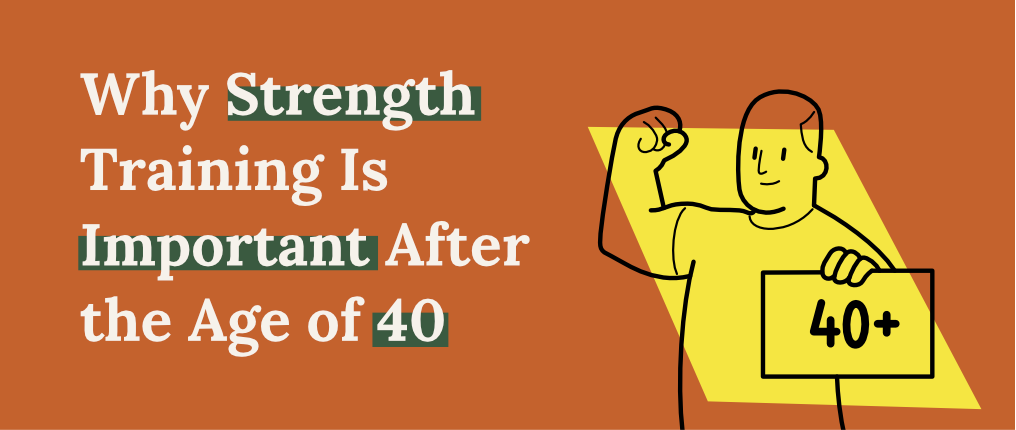
Over 40? Here’s Why Strength Training Matters More Than Ever
After the age of 40, our bodies start declining. Less testosterone for men, muscle atrophy, and decreasing bone density affect our mobility and increase the risk of falls and fractures. Along with a higher risk of diabetes, blood pressure, and high cholesterol, there are increasing health risks that require proactive measures to maintain a healthy weight. Luckily, strength training counters all that.
Strength training isn't just a way to build muscles; it impacts your entire body in countless positive ways. It enhances your musculoskeletal system, hormones, and even your mood and mental health. The release of endorphins, the confidence and positive self-image, and the sense of achievement. After enough time of consistent strength training, you'll end up feeling happy and in good shape.
In this article, we'll dive in depth into the benefits of strength training through the following points:
Benefits of strength training for individuals over 40
Importance of proper form and technique
Incorporate strength training into your fitness routine.
Overcoming barriers to strength training
Muscle loss prevention
As I mentioned, muscle mass and testosterone start decreasing after 40. Therefore, we need to increase muscle mass and get testosterone levels up again. This can be done naturally only with strength training. Believe it or not, you can still build muscles after 40. When muscles are put under stress from strength training, they adapt and grow stronger. It just requires consistency and dedication to a proper strength training routine.
Reduced health risks
As strength training increases muscle mass, it also increases your bone density. Like muscles, when bones are put under stress, they get denser and stronger. This can help prevent osteoporosis and osteoarthritis, enhance any loss in range of motion, and improve overall bone health.
Metabolism and weight management
Strength training triggers your body to use stored fat for fuel, and it does this efficiently at the same time it protects your muscles from being broken down. With your body being put under sufficient stress to release growth hormone and testosterone, your body gets into a catabolic phase, a building phase, where everything you were starting to lose is being built up again. When aligned with proper nutrition and rest, your figure will change. You'll have less fat and more toned muscles, and your body will become stronger and more resilient.
Injury prevention
Strength training comes with an unfairly bad reputation for causing injuries. As I've been into a number of different sports and physical activities, I came to a conclusion. Some sports or activities come with their injuries. Swimmer's shoulder, tennis elbow, golfer's shoulder, and runner's knee, along with regular bruises and sprains. Other than bruises and sprains, these other injuries come from simply overusing certain joints or the impact effect on the body by this type of physical activity. But strength training injuries come from a totally different cause; they come from you. Yes, you! Bad form, ego lifting, and untidy placement of weights are the common causes for injuries. Hernias and sprained or torn muscles usually happen with ego lifting, when you lift more than you can, just because you wish to show off or prove your strength. We've all done that at some point; you're not alone. Bruises or getting your fingers pinned between weights comes from being untidy with your weights or training place. But the most dangerous injury of them all is a herniated disk in your lower back. This comes mainly from doing exercise in bad form. That's why doing a correct form is very important.
The role of a certified personal trainer
If you work out at a gym, you will have access to certified personal trainers. They're a great starting point for learning proper form and preventing injuries. They can also help create a personalized fitness plan to meet your specific goals. They can also provide guidance on nutrition and overall wellness. Though not within the job description, they can also help with motivation and emotional support when you're feeling down or out of the mood to exercise. If you prefer to work out on your own, at home or a park nearby, there are simple techniques to keep you motivated and consistent.
An important thing to keep in mind to avoid injuring yourself is to:
Always keep good form.
Use enough weight to challenge you but still be able to move it in good form.
Start with lighter resistance and work your way up so you can safely know the limits of your body.
You move the weight, not the weight moves you.
Keep your workout place tidy to avoid slipping, tripping, or hitting something.
Types of strength training:
There are different ways to do strength training, like the following:
Bodyweight (Calisthenics)
Iron weights
Resistance bands
Here's the breakdown for each one of them so you can choose the one that suits you best.
Bodyweight (calisthenics)
You've probably done some of that before. Calisthenics is using your body weight to put resistance on your muscles. Pushups, pull-ups, dips, and squats are all forms of bodyweight exercise where you push your body weight to make your muscles grow.
Pros: You can do lighter or heavier exercise forms depending on your level of strength. It is highly accessible, can be done anywhere, and requires no equipment.
Cons: It gets challenging the more you advance. You may need extra balance and mobility abilities to perform advanced exercises, which can be inconvenient to someone overweight or having any mobility issues. And it falls short on exercises that target your shoulder muscles.
Iron weights:
Training with iron weights like barbells, dumbbells, kettlebells, and machines is usually done at the gym, and some like to buy small sets or machines to use at home or in the garage. In my opinion, iron weights achieve best results when used in conjunction with proper form and technique.
Pros: Easier to do than bodyweight exercises. Targets all body muscles and joints and puts them under sufficient pressure to build muscle and strength effectively.
Cons: Takes up space and can be expensive to buy. Going to the gym, on the other hand, can be expensive as well or time-consuming, especially for those with busy schedules or who are too busy or carry vibes that do not appeal to you.
Resistance bands:
I mentioned that iron weights can achieve the best results, yet resistance bands come with a very important benefit that iron weights may lack, consistency. As bands are easy to access and use almost anywhere, there's nothing standing between you and your workout. If iron weights achieve the best results, resistance bands are my first go-to choice if I'm too busy or if iron weights are not in reach at home or through a gym.
Pros: Affordable, easy to store, and light to carry around. Very gentle on the joints for those who have joint issues or injuries. Like iron weights, they target all muscles and joints.
Cons: Resistance bands offer 85% of the results you can get with iron weights. I'd rather get a certain 85% result than aim for a 100% result that I may not achieve. It's all about consistency and progress.
Training with resistance bands makes it hard to measure exactly how much you can lift. You can feel yourself getting stronger when exercises start feeling lighter and you move to a stronger band, but as bands offer variable resistance, you can't measure the exact amount of resistance you're applying. Same as bodyweight training, you can measure your progress with the number of counts per exercise or what challenging form of exercise you're doing, but you can't measure your strength in kilograms or pounds.
Bands are incredibly joint-friendly, making them a perfect choice for those over 40. Learn more in our comprehensive guide to resistance band training.
Motivation
Starting a fitness routine, especially strength training, can be challenging. Motivation and willpower, although important, are overrated, in my opinion. Getting yourself to get out of your comfort zone, learn something new, and commit to it for a long term can be overwhelming, but not if approached in a smart way. It's all about building the habit. Just as you can't lift 150 pounds on your first workout, you shouldn't expect to do something like that either. Meaning, start gradually and ease your way into it. Give yourself time to get used to and adapt to it till it naturally becomes part of your daily routine and lifestyle. Take little steps at first so you don't feel overtrained or exhausted, or worse, cause yourself injury.
Overcoming barriers to strength training
The first thing coming between you and strength training is the barrier to entry. The gym is too far or too expensive. I don't have the right equipment. I don't have the strength for it. I don't know much about it. I don't like it. Some of these are physical blocks; others are mental or emotional. Work your way around each of these smartly. If the gym is too far, choose one that is near home or work. If it is too expensive, find a cheaper gym or choose a subscription plan that fits your budget, or simply choose training with resistance bands instead. If you don't know much about strength training, there are online coaches, courses, ebooks, and apps where you can build your knowledge from.
How to track your progress
To track your progress, I advise you to keep a log of your workouts. Log the muscles you worked, your number of sets and reps, and the resistance you applied, as in which band you used or how many bodyweight counts you did or how much weight you moved. Speaking of motivation, it helps when you track your progress.
After a few workouts, you'll start seeing results and notice that exercises are getting easier. After a few more log entries, you'll see that your active days are starting to pile up. After a bit more time, you'll find yourself halfway towards your goals, and it will be a loss to give up now. After a bit more time, strength training will become a habit, a hobby, your fun time, or even your escape from troubles. I read a quote once that said, "When you see results, it becomes an addiction," and that's a great thing to be addicted to. Don't you agree?
Setting realistic goals
"Expectations are the first step to disappointment," they say. To avoid that, you need to set realistic expectations and goals. Overestimating the amount or time of results is a great source of disappointment. To counter that, be realistic with your goals and expectations.
Don't expect to have the body of a bodybuilder in a few months. Muscle growth takes some time; it's in the name, "growth." It doesn't happen overnight. It's a slow process. That's why consistency matters a lot.
Don't expect to lift too heavy too soon. That's call for injuries. As your muscles grow slowly, so does your strength and exercise experience. Take it one step at a time and you'll be surprised how much you've added up after few months.
Speaking of time expectations and body transformation being a slow process, how much time are we talking about here, you may ask? Good question. We're talking a few months. The average period is three months to start seeing noticeable changes. If it takes you any longer than that, there's nothing wrong with you. If it takes too long, certainly some adjustments can fix what's missing to reach your goals. Maybe changing your exercises, or your number of sets and reps, or simply changing something with your nutrition. I'd say give it 10-12 months to see a super clear transformation that everyone around you would notice. If you work out consistently for a year, I can call you an athlete. After a year, you are no longer doing exercises; you're an active person, and exercise is an important part of your lifestyle.
Recap
There are different ways to do resistance training. Choose the one that fits your goals and abilities. It's good to mix or switch between them if the circumstances change. The benefit stays the same. In my experience, iron weights yielded the highest results, but it's resistance bands that kept me going and got me there in the first place. When I was too busy to go to the gym, I worked out at home with resistance bands. It brought me gains, enhanced my fitness level, and brought me strength. When I got back to the gym, I didn't start from the ground up; I had a head start because of the bands.
Strength training is important.
Strength training over 40 is a key to health. Besides risk prevention from various chronic diseases, it promotes a good life quality and leads to a longer, healthier life. It benefits your body and mind in various ways.
If you wish to know more or start strength training on your own and be the leader of your own journey, the Fitness Roadmap has a resistance band exercise guide with animations and diagrams explaining every move. It also provides workout plans, a nutrition guide, and techniques to motivate you to make exercise a healthy habit and a part of your lifestyle for the long run.
the fit.camp
Join the fit camp where fitness is made simple for beginners and busy ones.
© 2026. All rights reserved.