
How To Build Muscles At Home When Busy
This blog post discusses the dilemma of finding the time to exercise and get fit when you are busy. Going to the gym won't help, as you'll lose the most important factor for getting fit when you're busy: consistency. The next best alternative is to build muscles at home. In this blog post I'll tell you how to do that, especially when you are busy.
The Fit Camp - Ashraf Kamel
7/18/20264 min read

How to Build Muscle at Home While Busy? Alternative Methods
Sometimes life can put a lot on your plate, whether it's work, family, or other responsibilities. At times like these, like many people, you may forget about yourself and put yourself last, missing the fact that without you, there's no one else to fulfill your obligations. You are the most important piece in all of this. If you're not healthy, you won't function properly, and everything around you will eventually suffer.
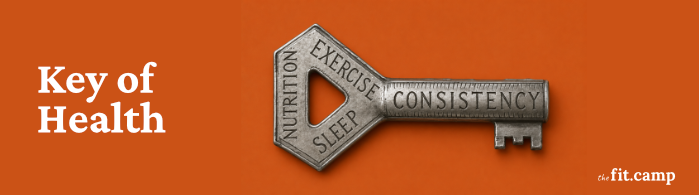
The Health "Key"
Sleep, nutrition, and exercise are the three main pillars of a healthy body. I call them the "Health Triangle." But the most important thing that makes these three work for you is consistency. That's why, when I created my Fitness Roadmap course, I explained that the Health Triangle (sleep, nutrition, and exercise) combined with consistency becomes the key to a healthy body.
It can be very hard to find time to exercise when you're under pressure or overwhelmed by obligations. This is where smart and careful planning comes in. This article focuses on the "Exercise" part of the Health Triangle. First of all, you'll exercise at home or at your workplace to save time. This is especially useful if you work from home, care for someone, or have a job or business that requires you to stay in one place and always be ready to respond. In the next few sections, I'll compare the traditional way of exercising with a more optimized approach.
The regular way (which is not bad, by the way):
Your options for building muscle at home usually include having your own home gym, a couple of dumbbells, or my favorite weapon of choice: resistance bands or resistance tubes. The traditional plan is to work out for about an hour, three to four times a week. You can even cut that down to 30–40 minutes, which is still pretty good.
But what if you're committed to somethingو or living a lifestyleو that can't be scheduled? Maybe you're always on call, caring for someone, or responsible for something that demands your attention. That's where a home training method that almost no one talks about comes in.
The 10-minute session way:
With this method, you spread your workout throughout the day. You train a single muscle group in a short session. For example:
After a quick warm-up or a short walk, you do 3-4 sets of squats before brunch. Then you do 3-4 sets of pull-ups or band rows before lunch. Later, before sunset, you do 3-4 sets of chest flies or band push-ups. You can call it a day there, or, if you have a little more time, you can add supersets of shoulder presses and biceps curls, shoulder flies and triceps exercises, or rear delt flies and shrugs. Alternatively, you can move all your smaller muscle groups and core work to the next day, using supersets if you like to make the most of your time.
There are two possible workout schedules here:
Whole workout, with compound and isolation movements, spread across the day.
Compound exercises on one day and isolation exercises on the next.
I usually preferred the second method of putting compound exercises on one day and isolation exercises on another. It allowed me to work out six days a week, helping me exercise and burn calories every day. There were also times when I did a full workout one day and simply walked the next whenever I had the chance.
Why this works
The misconception that you need at least 30 minutes of exercise before you start burning fat mostly applies to cardio exercise. Resistance training, on the other hand, elevates your metabolism and keeps your body burning calories for up to 72 hours after your workout.
Resistance training is low-impact and can be done at home or at your workplace without bulky equipment like a treadmill or stationary bike. You can take your dumbbells or resistance bands out of storage, use them, and put them right back when you're done. All you need is a suitable corner that you can repurpose for training.
Another benefit I noticed with this approach is that, as someone who sweats heavily, the workouts were short enough that I didn't sweat excessively, allowing me to continue with my day comfortably.
When I was busy and on a tight schedule, stepping away from my desk for a quick workout was the best break I could take. It took my mind off work for a while, gave me a sense of accomplishment, and when I returned to work, I felt refreshed and ready to continue.
Conclusion
This approach helped me stay consistent with my exercise routine despite everything I had on my plate. It showed me that a workout doesn't have to be completed in one long session. It can be broken into smaller sessions throughout the day while still providing the same benefits: an elevated heart rate, mechanical tension, and muscle stimulation.
If you'd like to learn more about which exercises to do, how to get the most out of your resistance bands, or follow a complete system designed to help you stay fit despite a busy schedule, you can learn more through my Fitness Roadmap course. The course includes a step-by-step guide to building healthier habits, animated exercise demonstrations and diagrams that explain each exercise in detail, workout programs designed for busy schedules, and a practical nutrition guide to help you make better food choices and align your eating habits with your fitness goals so you get the most from your workouts.
the fit.camp
Join the fit camp where fitness is made simple for beginners and busy ones.
© 2026. All rights reserved.